Frequently Asked Questions
What is the difference between cement and concrete?
Although the terms cement and concrete often are used interchangeably, cement is actually an ingredient of concrete. Concrete is basically a mixture of aggregates and paste. The aggregates are sand and gravel or crushed stone; the paste is water and portland cement. Concrete gets stronger as it gets older. Portland cement is not a brand name, but the generic term for the type of cement used in virtually all concrete, just as stainless is a type of steel and sterling a type of silver. Cement comprises from 10 to 15 percent of the concrete mix, by volume. Through a process called hydration, the cement and water harden and bind the aggregates into a rocklike mass. This hardening process continues for years meaning that concrete gets stronger as it gets older.
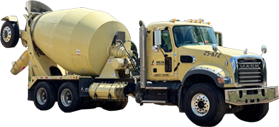
So, there is no such thing as a cement sidewalk, or a cement mixer; the proper terms are concrete sidewalk and concrete mixer.
What does it mean to "cure" concrete?
Curing is one of the most important steps in concrete construction, because proper curing greatly increases concrete strength and durability. Concrete hardens as a result of hydration: the chemical reaction between cement and water. However, hydration occurs only if water is available and if the concrete’s temperature stays within a suitable range. During the curing period-from five to seven days after placement for conventional concrete-the concrete surface needs to be kept moist to permit the hydration process. new concrete can be wet with soaking hoses, sprinklers or covered with wet burlap, or can be coated with commercially available curing compounds, which seal in moisture.
What is air-entrained concrete?
Why does concrete crack?
What does 28 -day strength mean?
What is 3,000 pound concrete?
It is concrete that is strong enough to carry a compressive stress of 3,000 psi (20.7 MPa) at 28 days. Concrete may be specified at other strengths as well. Conventional concrete has strengths of 7,000 psi or less; concrete with strengths between 7,000 and 14,500 psi is considered high-strength concrete.
How do you remove stains from concrete?
Stains can be removed from concrete with dry or mechanical methods, or by wet methods using chemical or water.
Common dry methods include sandblasting, flame cleaning and shotblasting, grinding, scabbing, planing and scouring. Steel-wire brushes should be used with care because they can leave metal particles on the surface that later may rust and stain the concrete.
Wet methods involve the application of water or specific chemicals according to the nature of the stain. The chemical treatment either dissolves the staining substance so it can be blotted up from the surface of the concrete or bleaches the staining substance so it will not show.
To remove blood stains, for example, wet the stains with water and cover them with a layer of sodium peroxide powder; let stand for a few minutes, rinse with water and scrub vigorously. Follow with the application of a 5 percent solution of vinegar to neutralize any remaining sodium peroxide.
What are the decorative finishes that can be applied to concrete surfaces?